2026.09.10
Content
You are shortlisting capsule suppliers, and every sales deck says the pod is smart. One vendor hands you a system architecture diagram and a commissioning checklist; the other points at a touchscreen. When the question is procurement for a resort, a micro-housing project, or a remote worksite, the real difference between smart high-tech living pods is the integration layer that keeps the unit operational long after handover.
A smart high-tech living pod is a factory-built modular dwelling with integrated building automation for climate, energy, security, and remote diagnostics, delivered as a single pre-tested unit.
The term separates the product from a sleeping capsule, a shipping container conversion, or a hotel room with a smart speaker. A genuine smart pod coordinates sensors, controllers, and actuators as one system. Manufacturers such as Zhejiang Honghuiyuan Import & Export Co., Ltd. build these units in their own factory, which means electrical, plumbing, and communication wiring are pre-installed before the module leaves the production line.
Definition: A smart high-tech living pod is a prefabricated dwelling whose operational systems, including HVAC, lighting, access control, and energy metering, are digitally managed from a central controller and are remotely accessible to the operator.
The climate and energy system is the biggest value driver in a smart pod, typically accounting for 35 to 45 percent of total lifecycle cost in temperate and cold regions.
High-efficiency heat pumps pair with zoned sensors to heat or cool only occupied spaces. The smart control algorithm learns occupancy patterns from door counters and motion sensors, then adjusts setpoints automatically. This is where a high-tech pod earns its price premium over a conventional prefab cabin.
Measured savings from similar units show that automation does more work than insulation upgrades alone.
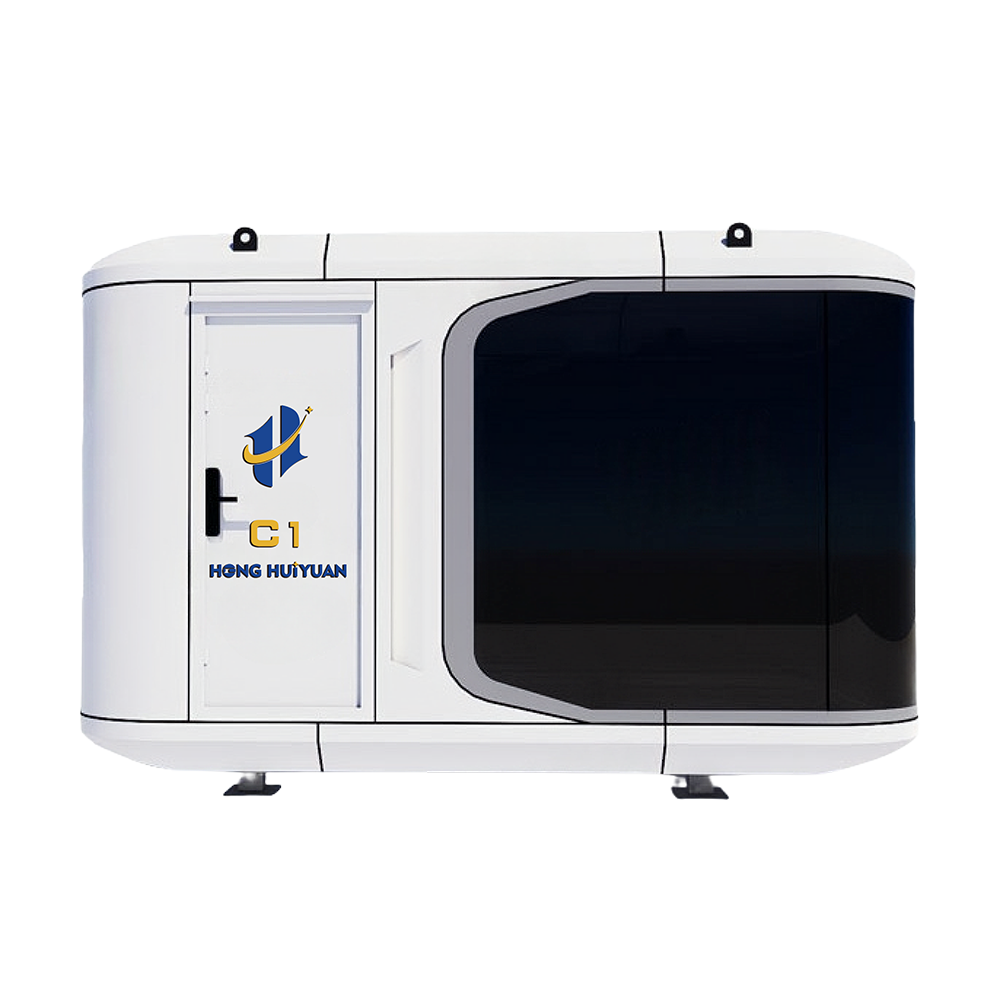 Smart Living Pods Supplier with Modular Landscape and Capsule OptionsAutomation in these pods can outperform insulation upgrades alone, but the enclosure must hold target temperatures in extreme conditions. Explore this supplier's range to match your climate and site needs.View Product →
The enclosure, not the electronics, decides whether the smart system can hold the target temperature when outside conditions are at either extreme.
Smart pods for extreme climates use a galvanized steel frame plus a composite panel core with closed-cell foam insulation. With proper sealing and thermal breaks, these units can maintain a 20 C indoor setpoint when the outdoor temperature is minus 30 C, or keep a room below 26 C in plus 45 C heat. This matters for operators who plan to deploy the same pod model across different latitudes.
Four enclosure specs to request from any supplier:
Factory-prefabricated pods arrive wired, fitted, and sealed, which cuts site work from several weeks to a few days.
The module ships at 90 percent completion. On-site work is joining the utility connections, anchoring the unit, and commissioning the control system. For a single standard capsule, two workers can complete installation in 2 to 3 days. For a resort with 40 units, this scheduling predictability shortens the revenue gap between investment and opening.
| Metric | Smart prefab pod | Site-built structure |
| Time to occupancy | 2-3 days per unit | 8-14 weeks |
| Envelope consistency | Factory controlled | Depends on weather |
| Waste generated | Under 3% on site | 10-20% |
| Commissioning | Factory test plus site check | Full site startup |
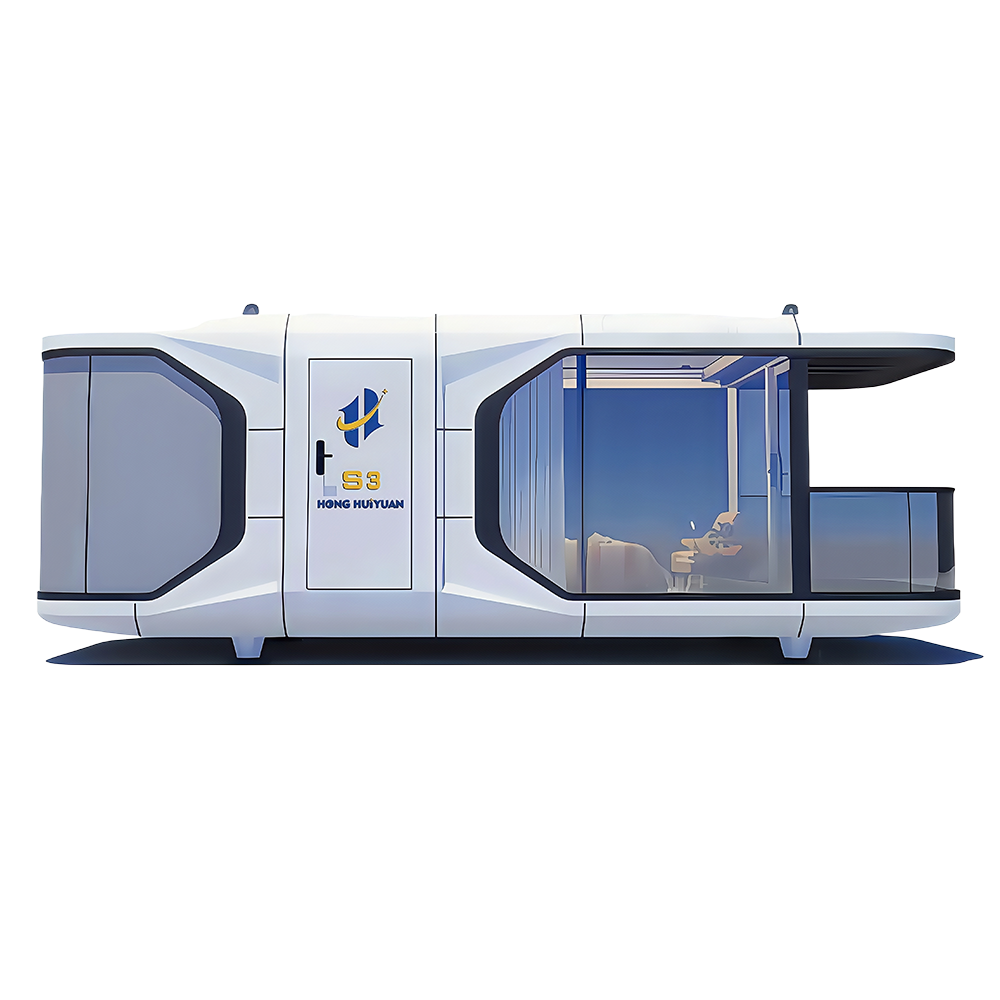
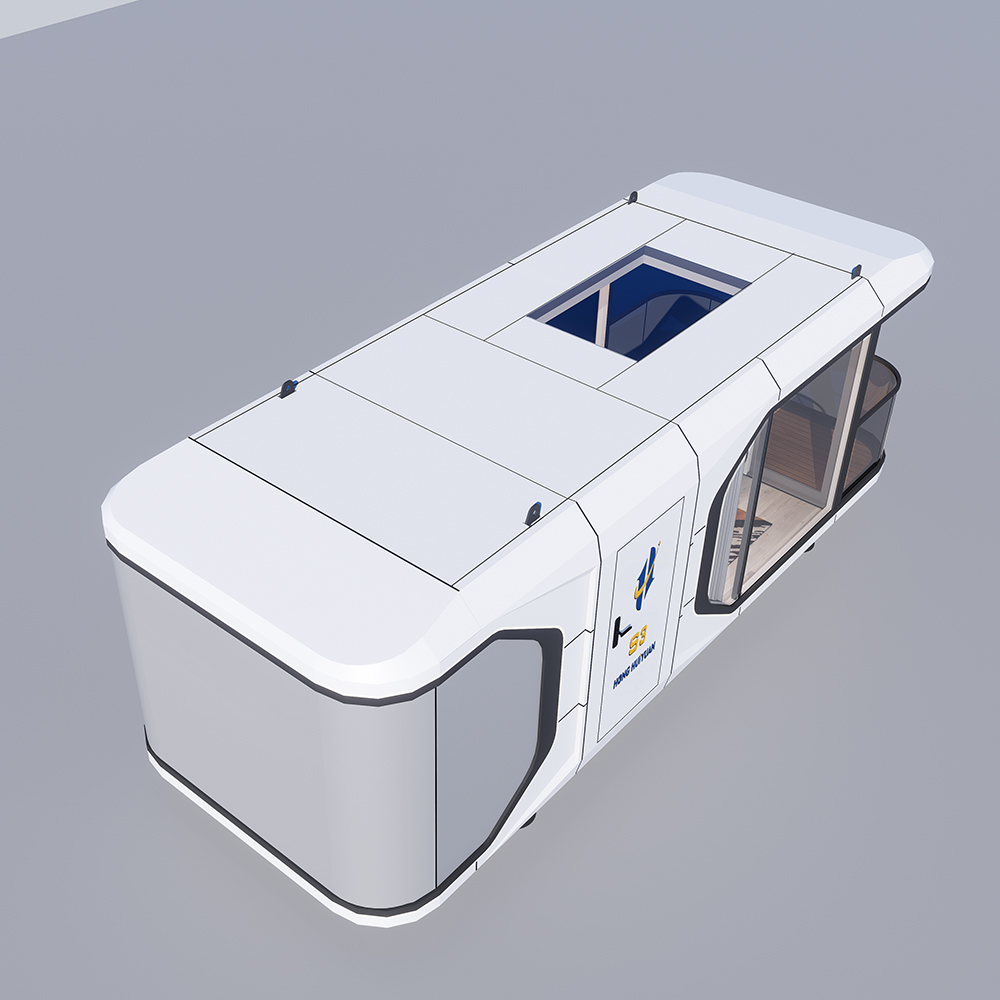 S3 Standard Prefab Smart Modular Home with Intelligent ControlThis module ships 90% complete, allowing 2-3 day installation for two workers. Its smart dashboard enables remote monitoring of climate, occupancy, access, and energy, ideal for resorts seeking fast revenue.View Product →
A smart pod's real value is the single dashboard that lets an operator monitor climate, occupancy, access, and energy from any location.
Each unit ships with a control hub that connects sensors, actuators, and meters over a wired backbone with wireless access points. Operators can manage hundreds of pods from one account. Fault reporting is not a generic error code; the system tracks trending deviations, such as a cooling circuit running longer than a set threshold or a power draw outside the expected curve, and pushes an alert before a failure occurs.
Review the full breakdown of smart living pod design features and applicationsThe same smart pod platform becomes a glamping unit, an extreme-climate shelter, a long-stay residence, or a mobile office when the interior and exterior are configured for the role.
Zhejiang Honghuiyuan's product line spans four application families under one manufacturing roof. Customization goes beyond paint colors: interior partitions, window placement, and even the structural shape can be changed before production. For a scenic project, an apple-cabin configuration with panoramic glazing may be selected; for hardened deployments, the extreme-climate habitat series prioritizes insulation and structural redundancy.
Common customizations:
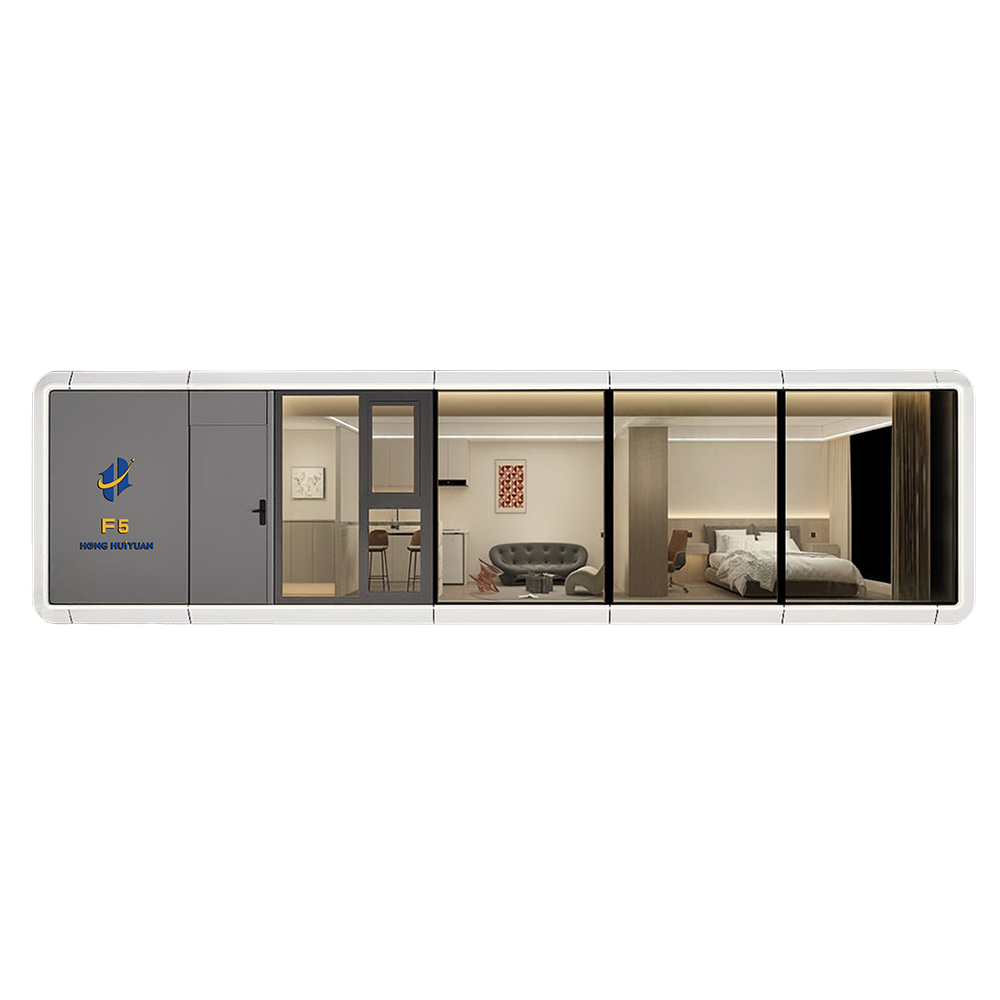
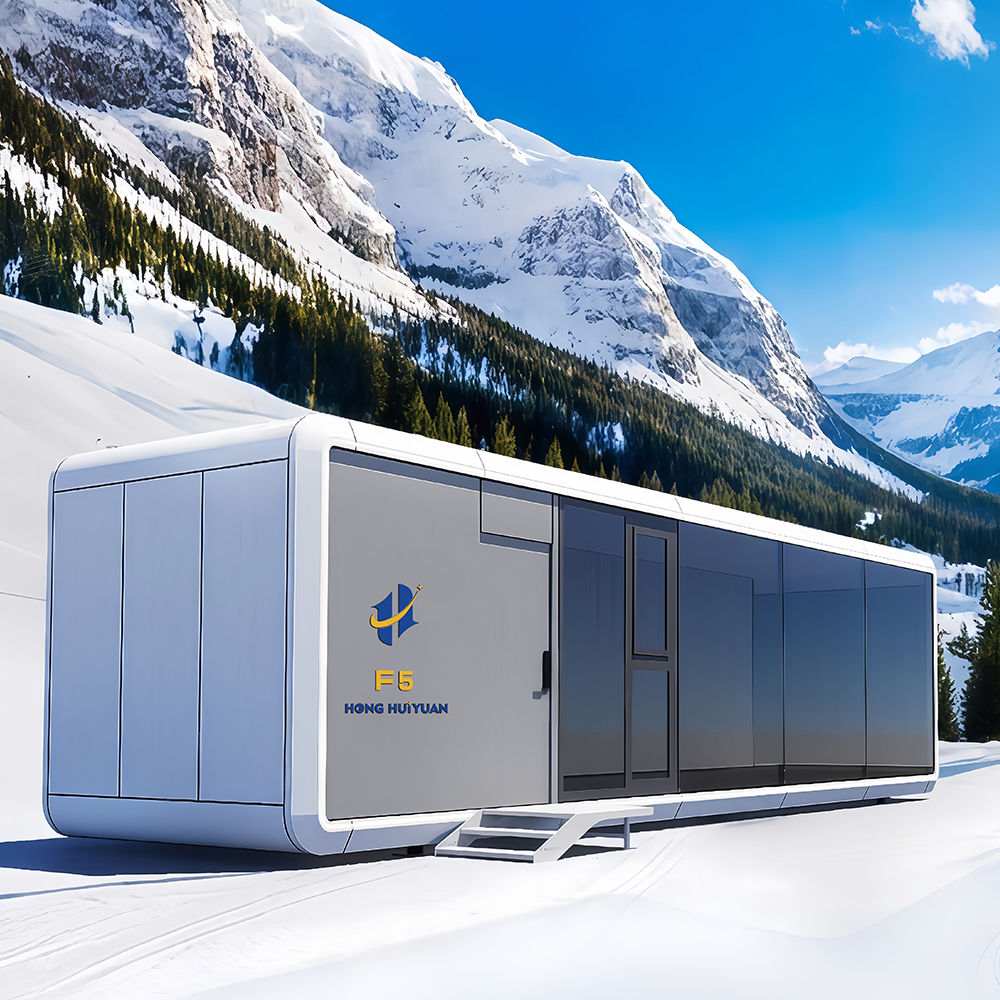 F5 Smart Resort Apple Pod Home with Customizable LayoutWith 38㎡ flexible spaces and common customizations, this pod adapts to scenic homestays or campsites. Evaluate its control architecture, enclosure performance, installation record, and support when considering.View Product →
Evaluate a smart pod on four measurable criteria: control-system architecture, enclosure performance, installed commissioning record, and post-delivery support.
Ask the supplier to show the wiring topology and controller protocol. Request test reports for panel insulation. Confirm who provides commissioning once the unit reaches the site. These three answers separate a genuine manufacturer from a reseller.
For a detailed look at the company behind the product, see Zhejiang Honghuiyuan Import & Export Co., Ltd.
A smart high-tech living pod is a prefabricated modular dwelling with integrated automation for climate control, energy management, security, and remote monitoring. It ships from the factory as a single pre-tested unit, which shortens on-site installation time.
A standard pod can be installed and commissioned in 2 to 3 days on a flat prepared foundation. Larger units with custom foundations or complex utility hookups may take 5 to 7 days.
Yes, when the pod is built with a galvanized steel frame, insulated composite panels, and sealed thermal breaks. These units can maintain comfortable indoor temperatures when outside conditions range from minus 30 C to plus 45 C.
The company offers market analysis, project planning, custom design, and full implementation. Customization can change interior partitions, window placement, exterior cladding, and even the structural form before production.

 Contact Us
+86-137 5820 5685
+86-571 8550 0659
 Send An E-mail
Building 4, No. 2, Shuyun Road, Yuhang District, Hangzhou City, Zhejiang Province, China
 Mobile

 English
 Español
 عربى
عربى