2026.10.01
Content
A 2026 habitat-risk analysis reported by Phys.org found that 36% of species' current land habitats could face multiple types of climate-driven extreme events, from heat waves to wildfires, in the same landscape. The same pressure is changing how developers buy shelter. A mining contractor in northern Canada housing 40 workers at -40°C, and a desert glamping operator in the Middle East cooling suites through 50°C summers, face the same problem: they need durable, serviceable space in a location where conventional construction is slow, expensive, and fragile. Extreme Climate Habitats Pods exist because these projects now outnumber the environments where standard prefab housing still works.
An Extreme Climate Habitat Pod is a prefabricated, self-contained modular dwelling engineered to keep interior conditions livable when exterior conditions exceed standard building design ranges. The category sits between conventional prefab housing and full site-built construction: it is built in a factory, shipped complete, and specified against measured climate data rather than assumed conditions.
Extreme climate pods are factory-built enclosures that combine high-insulation envelopes, sealed joints, reinforced anchoring, and redundant HVAC to operate through sustained heat above 45°C, cold below -30°C, high winds, dust storms, and flood exposure.
Projects select pods because of four measurable attributes:
The 36% multi-extreme-event figure is not abstract. It describes landscapes where heat waves dry vegetation, fire follows, then rainfall triggers mudslides. Each event attacks a different part of a conventional building envelope: solar radiation degrades roofing, wind drives moisture through seams, and temperature cycles fatigue connections.
Peer-reviewed research has shown that natural microhabitats buffer animals from climate extremes and reduce mortality during extreme events. Habitat pods apply the same principle to people: instead of exposing occupants to the open environment, the pod places them inside a compact buffered enclosure. That is why Extreme Climate Habitats Pods are developed with factory quality control rather than site improvisation — the buffer must stay reliable through weeks of uninterrupted use.
Temperature ranges that pod envelopes must bridge
Annual or daily swings in Celsius degrees across typical extreme climate deployment zones
The engineering consequence is visible in the chart: the larger the exterior swing, the more envelope and HVAC must work together. At a 65°C swing, the same pod that holds warmth through an arctic night must also avoid overheating on a clear solar day. This dual requirement, not single-season optimization, drives most of the cost and complexity in extreme climate habitat design.
Design teams focus less on a single temperature record and more on the swing: arctic deployment in northern Canada can pair -45°C ambient nights with interior gains that push cooling demand even in winter. The swing, not the extreme itself, sets the specification.
Every credible extreme climate pod is judged by how it handles four failure points: envelope leakage, thermal bridging, HVAC failure, and condensation. The design response is consistent across manufacturers who build to real climate data, not brochure averages.
Materials matter at the edges: galvanized steel frames resist coastal salt air, UV-stabilized coatings limit solar degradation in desert use, and raised or piled foundations keep the floor structure clear of floodwater. Procurement teams should verify each detail against the target site rather than accepting a generic specification. Zhejiang Honghuiyuan Import & Export Co., Ltd., the manufacturer behind this site's modular capsule line, applies these principles across its extreme climate habitat category.
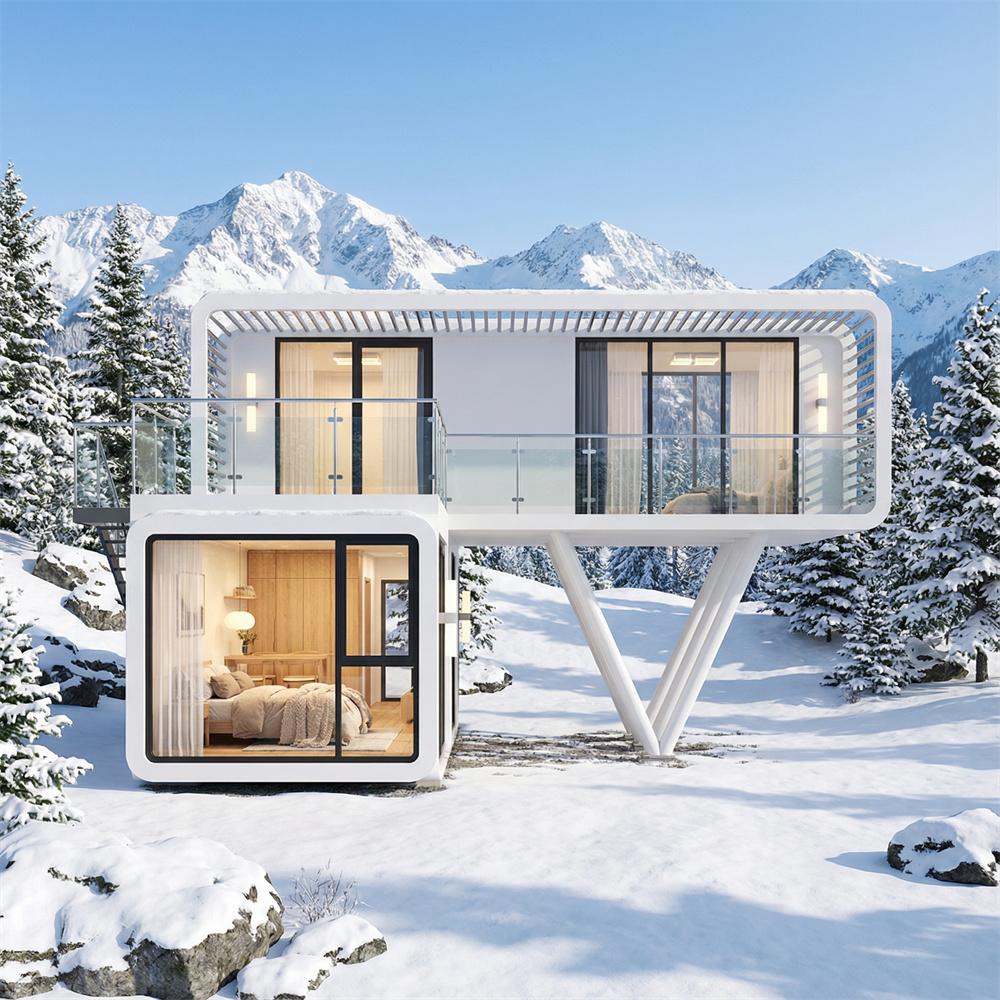 Eco-Friendly Waterproof V-Type Space Capsule Cabin for CampingThis V-shaped capsule cabin features waterproof and eco-friendly materials with panoramic windows, suited for high-end camping and extreme weather sites. It appears as a practical option when procurement teams need a compact, durable shelter for rain-prone or humid environments.View Product →
For sites dominated by rain and humidity, a waterproof V-type capsule cabin body is a practical starting point: the curved roof sheds water, the sealed shell resists wind-driven rain, and the compact footprint reduces the surface area through which heat escapes.
Extreme climate pods now appear in four recurring project types, each with a different buyer logic:
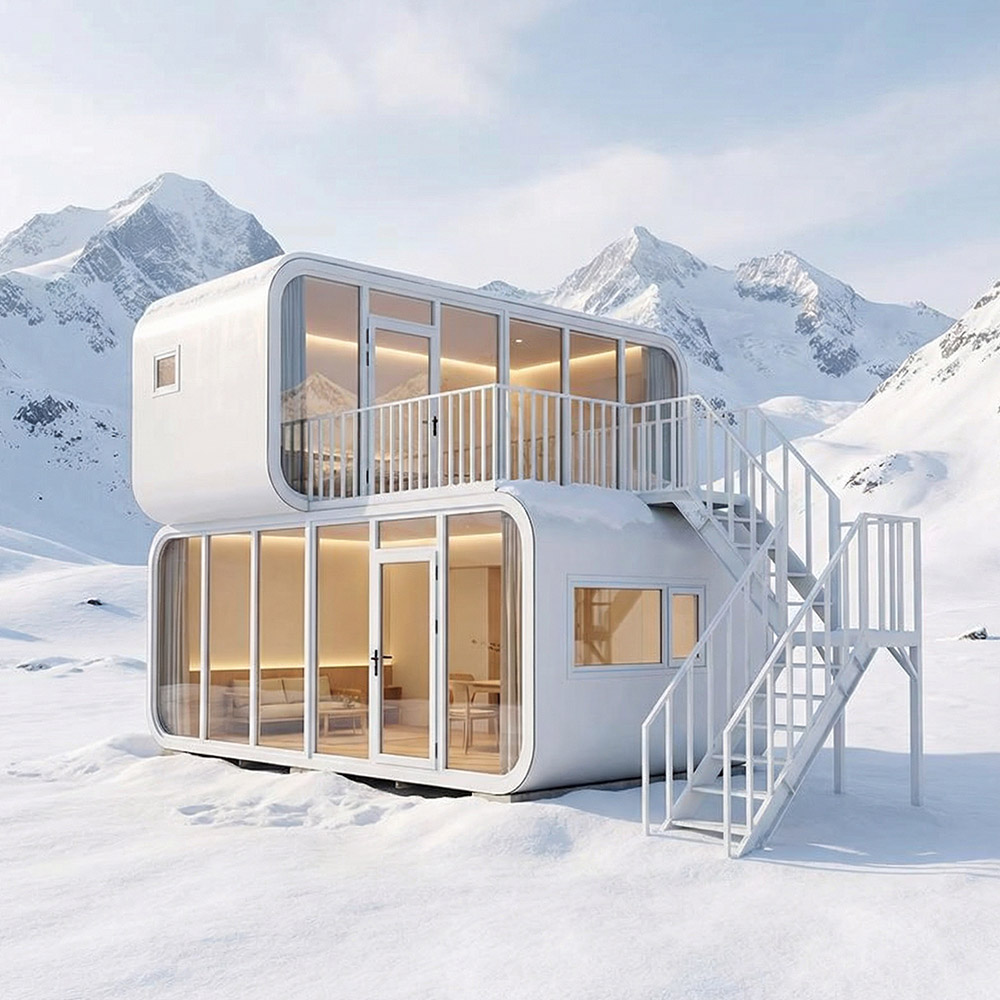 Portable Smart Outdoor Space Capsule Dwelling with Access StairsThis mobile capsule dwelling integrates smart controls, solar power, and a stair structure for raised access. It fits well in remote-site projects where quick installation above flood or snow levels and easy transport are key considerations.View Product →
A portable smart outdoor space capsule dwelling with access stairs covers the remote-site cases well: the integrated stair module raises the living floor above snow or flood level, and the compact envelope can be craned onto a prepared pad in a single day.
Buyers should evaluate pods against their own climate scenario, not a generic product sheet. The table below lists representative design envelopes that a qualified supplier should be able to document.
| Climate zone | Exterior design range | Envelope key spec | Ask the supplier for |
| Hot desert | -5 to 50°C | Solar-reflective coating, dust-sealed joints | Solar heat gain coefficient data |
| Arctic | -45 to 20°C | Low-U insulated panels, thermal-bridge-free frame | U-value test report |
| Alpine | -25 to 30°C | Wind and snow load anchoring | Wind load certificate |
| Coastal storm | 0 to 38°C | Corrosion-protected frame, raised foundation | Salt-spray corrosion test results |
The envelope. Look for factory-tested insulated panels, gasketed joints, minimal glazing with high-performance glass, and a redundant HVAC system. These four features decide whether a pod holds interior conditions through a multi-day extreme event.
Manufacturing lead times typically range from 45 to 90 days depending on customization. Site preparation is the variable: a prepared concrete pad allows installation in days, while remote sites requiring roadworks or pile foundations take longer.
Yes, with add-ons. Roof-mounted or ground-mounted solar, battery storage, and diesel or propane backup generators are common configurations. Off-grid operation changes the HVAC option: use high-efficiency split systems and size the battery bank to the pod's measured load, not the nameplate.
At minimum, the supplier should provide factory test reports for air leakage, HVAC performance at rated temperature, and structural anchoring calculations. If these documents cannot be produced for the batch you are buying, treat the specification as marketing.

 Contact Us
+86-137 5820 5685
+86-571 8550 0659
 Send An E-mail
Building 4, No. 2, Shuyun Road, Yuhang District, Hangzhou City, Zhejiang Province, China
 Mobile

 English
 Español
 عربى
عربى