2026.07.28
Content
The choice between an office pod, a fixed meeting room, or a full‑scale renovation is one of the most consequential facility decisions a growing company can make. A modern acoustic pod vs phone booth debate misses the bigger picture: these prefabricated units compete directly with permanent construction on cost, speed, and flexibility. This article delivers practical answers to whether pods are truly soundproof, how much they cost, how much floor space they consume, and how long they last — all backed by verifiable data — so you can decide if an office pod is worth it for your workplace.
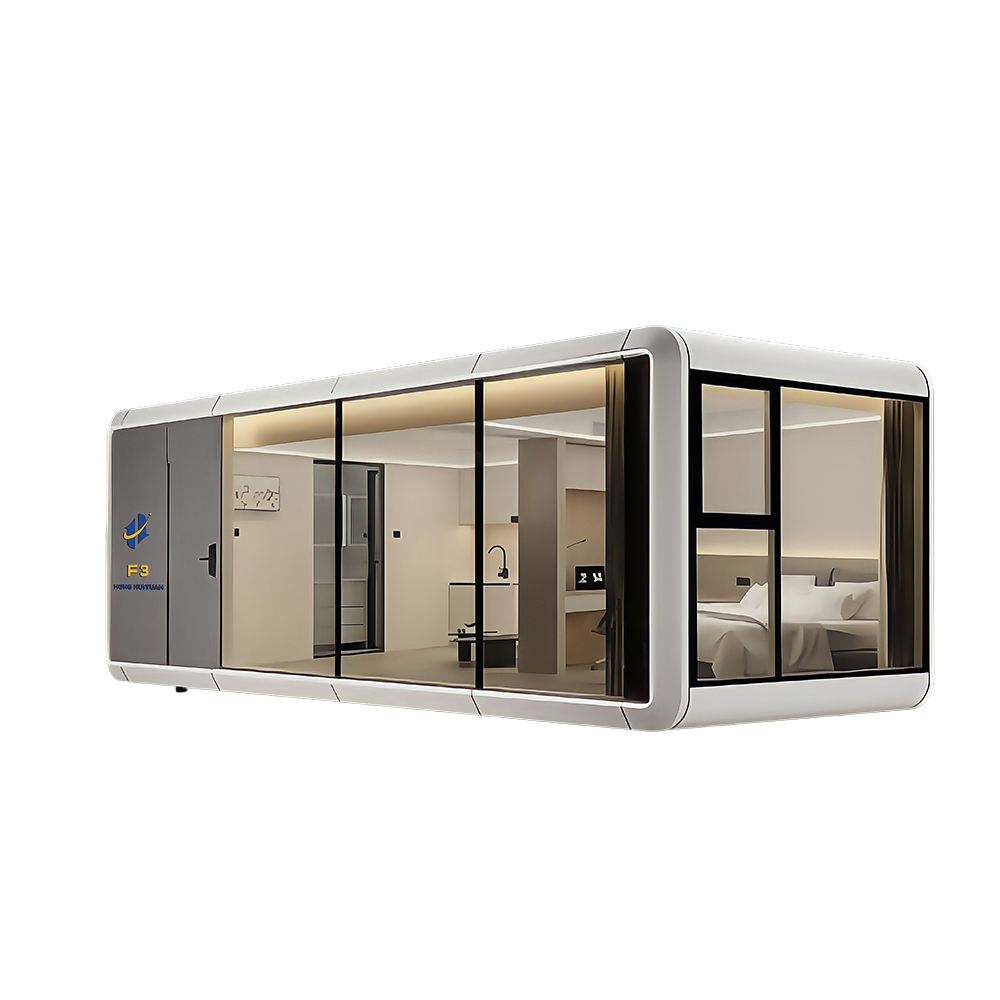
An office pod vs meeting room comparison reveals fundamentally different cost and time profiles. A traditional drywall meeting room requires architectural drawings, permits, HVAC rebalancing, and often 4–8 weeks of construction. A prefabricated pod can be assembled and operational in a single afternoon. The table below contrasts these options across the criteria that matter most to facility managers.
| Feature | Office Pod (2‑person) | Built Meeting Room | Drywall Office | Phone Booth |
|---|---|---|---|---|
| Typical capacity | 1–4 people | 4–12 people | 1–2 people | 1 person |
| Soundproof rating | STC 35–45 | STC 40–50 (if properly sealed) | STC 35–45 | STC 30–38 |
| Cost (installed) | $8,000–$15,000 | $10,000–$30,000+ | $12,000–$40,000 | $4,000–$8,000 |
| Installation time | 4–8 hours | 4–8 weeks | 4–12 weeks | 2–4 hours |
| Relocatable | Yes, fully | No — permanent structure | No | Yes |
The office pod vs traditional office renovation gap is even wider. A renovation requires a general contractor, subcontractors, inspections, and often a permit fee of $500–$2,000. It can disrupt an entire floor for weeks. An office pod is simply delivered, wheeled into position, and plugged into a standard electrical outlet. From a real estate strategy perspective, the ability to take the pod when the lease ends — instead of leaving behind a permanent alteration — can save $15,000 or more in restoration costs at the end of a tenancy.
When comparing an acoustic pod vs phone booth, the distinction is primarily one of size and comfort. A phone booth pod is engineered for quick calls and typically includes a small shelf and a stool. It may achieve an STC rating of 30–35, enough to prevent nearby colleagues from hearing a conversation, but it cannot accommodate a laptop and a secondary screen comfortably. An acoustic office pod, by contrast, is a true micro‑office that can replace a fixed desk for hours of deep work. If the need is purely for short, private calls, a phone booth is the more space‑efficient choice; for anything beyond 20 minutes, the larger pod is significantly more comfortable and productive.
A common and legitimate question is are office pods soundproof. The accurate answer is that they are not completely soundproof, but they reduce sound transmission to a level where speech privacy is effectively achieved. No compact pod can completely block the low rumble of a jackhammer outside the building, but the reduction of human‑voice frequencies is dramatic. A pod rated at STC 40 will render normal conversation inside unintelligible from just one meter outside the pod, and vice versa. Independent acoustic tests show that such a pod can reduce perceived loudness of typical office chatter by 85–90%, equivalent to a drop from the noise level of a busy restaurant to that of a quiet library.
This performance is achieved through dense, multi‑layer wall panels that use mass‑loaded vinyl barriers, acoustic foam absorbers, and sealed door gaskets. Ceiling and floor panels are similarly treated, and ventilation ducts are fitted with silencers. This engineered approach means the pod meets the acoustic privacy needs of HR discussions, client calls, and confidential strategy meetings. When evaluating options, always request the STC rating and, if possible, conduct a speech‑intelligibility test in the actual office environment — the difference between a pod with a rating of 35 and one with 45 is the difference between muffled words and near‑silence.
Determining are office pods worth it requires a clear picture of how much does an office pod cost and what that investment returns. The answer is a quantified yes for most organizations that need to add focused‑work capacity without moving or renovating. The cost of a pod varies by size and features:
When measured against the cost of constructing a single drywall office — which ranges from $12,000 to $40,000 including electrical, HVAC, and finishing — a pod costs roughly 40–60% less upfront. Additionally, because a pod does not require a building permit or structural modifications, it avoids weeks of design and review cycles. Over a five‑year period, factoring in the ability to relocate and the zero maintenance cost of the steel frame and acoustic panels, the total cost of ownership is typically 50–70% lower than that of a permanent room. Employee productivity gains further tip the scale: surveys indicate that employees who have access to a private pod for focused work report a 22% increase in task completion rate compared to those who rely solely on open‑plan desks.
The question how much space does an office pod need considers both the unit’s footprint and the clearance required for air circulation, door swing, and comfortable access. A standard single‑person pod requires a floor area of approximately 1.2 m × 1.2 m (4 ft × 4 ft), but a realistic installation zone including a walkway margin is closer to 1.8 m × 1.8 m. The table below maps pod size to capacity and recommended allocation space.
| Pod Type | Internal Dimensions (W × D) | Total Footprint (with clearance) | Capacity | Best Use |
|---|---|---|---|---|
| Phone booth | 1.0–1.2 m × 1.0–1.2 m | ~1.8 m × 1.8 m | 1 | Short calls, quick focus |
| Focus pod | 1.5–1.8 m × 1.5–2.0 m | ~2.2 m × 2.5 m | 1–2 | Deep work, paired programming |
| Meeting pod | 2.2–2.5 m × 2.2–3.0 m | ~3.0 m × 3.5 m | 3–4 | Team huddles, client video calls |
To determine what size office pod do I need, list the primary activities that will occur inside. If the task is solely phone calls, a one‑person booth is sufficient. If you need to accommodate a sit‑stand desk, a monitor, and perhaps a visitor chair, select a focus pod with at least 1.5 m depth. Meeting pods require enough space for a table and chairs without the occupants feeling confined; a 2.5 m × 2.5 m internal dimension is a comfortable minimum for four people. Always add the recommended clearance around the pod — a minimum of 60 cm on all sides — to ensure proper ventilation intake and exhaust, and to allow the door to open fully without striking other furniture.
The process for how to install an office pod is designed to be non‑disruptive and fast. Most manufacturers ship the pod in flat‑pack or pre‑assembled panels that bolt together without special tools. The key steps are as follows:
Because no structural modifications are made, most office pods do not require a building permit — they are classified as furniture. Installation can be carried out by a two‑person team in a single workday, and the workspace around it remains usable throughout. If the pod needs to be moved, the process is reversed, and it can be reassembled in the new location without damage, often by the same in‑house facilities team.
When evaluating how long does an office pod last, it helps to separate the steel frame from the acoustic panels and electrical components. The steel structure, usually powder‑coated to prevent corrosion, has an indefinite service life if not physically damaged. The acoustic panels, typically made of high‑density polyester fiber or melamine foam, maintain their sound‑absorbing properties for approximately 8–12 years under normal indoor conditions before they may need replacement to restore peak performance. The ventilation fan, the only moving part, is rated for 50,000 hours of continuous operation — roughly 10–15 years of office use.
Overall, a well‑maintained office pod can function at full effectiveness for 10–15 years. Most manufacturers back this with a warranty of 5 years on the structure and 2 years on electrical components. The modular design also means that individual panels or the fan can be replaced without discarding the entire unit, extending its practical lifespan even further. When set against the lifecycle of a drywall office — which often requires repainting, carpet replacement, and HVAC duct cleaning every 5–7 years — a pod offers a lower‑maintenance, longer‑lived solution for creating private space in a dynamic office.

 Contact Us
+86-137 5820 5685
+86-571 8550 0659
 Send An E-mail
Building 4, No. 2, Shuyun Road, Yuhang District, Hangzhou City, Zhejiang Province, China
 Mobile

 English
 Español
 عربى
عربى