2026.11.09
Content
Every modular capsule house is defined by the quality of its envelope, and no part of that envelope works harder than the glass. Double-layer tempered hollow glass, often specified as 6+12A+6 Low-E, has become the benchmark glazing for modern space capsules.
Space capsules are compact living units built for glamping resorts, scenic hotels, and outdoor hospitality. Because floor area is small, designers maximize windows to make interiors feel open. Large glazed surfaces deliver panoramic views but also expose the interior to heat loss in winter, solar gain in summer, and ultraviolet radiation all year. A well-designed glass package changes that equation.
This article explains how double-layer tempered hollow glass improves safety, reduces thermal loss, and blocks UV radiation, and what to verify before ordering a capsule project. For background on the category, see how space capsule homes are evolving in modular construction.
Double-layer tempered hollow glass is an insulating glass unit (IGU) made of two tempered panes separated by a sealed air cavity. In capsule house specifications, the usual configuration is 6+12A+6: two 6 mm tempered panes, a 12 mm gap, and dry air or argon gas inside.
Each layer has a distinct job, and the quality of the assembly determines final performance.
During tempering, glass is heated to roughly 650°C and cooled rapidly with forced air. This process creates the surface compression that gives tempered glass its strength and determines how it behaves when broken.
A capsule wall may be built from steel and sandwich panels, but its most exposed component is still the window. Tempering directly addresses the two biggest glass risks: dangerous breakage and low impact resistance.
Annealed glass fractures into long, sharp shards. Tempered glass breaks into small, blunt, cubical granules. That granulation is a deliberate result of the tempering process, and it dramatically reduces the risk of cuts — a critical point for resort cabins, family glamping units, and public spaces where guests and children are present.
Strength is the second layer of protection. Tempered panes resist accidental impact, wind loading, and thermal stress far better than ordinary glass. In a double-layer unit there is also redundancy: if the outer pane is damaged, the inner pane remains intact and continues to act as a weather and security barrier while the unit is replaced.
The mounting system matters too. A properly designed aluminum frame with EPDM gaskets holds each pane securely, and the sealant bead prevents water ingress. Buyers evaluating smart living units, including Smart High-Tech Living Pods with integrated climate and lighting controls, often treat the glazing specification as a strong indicator of overall build quality.
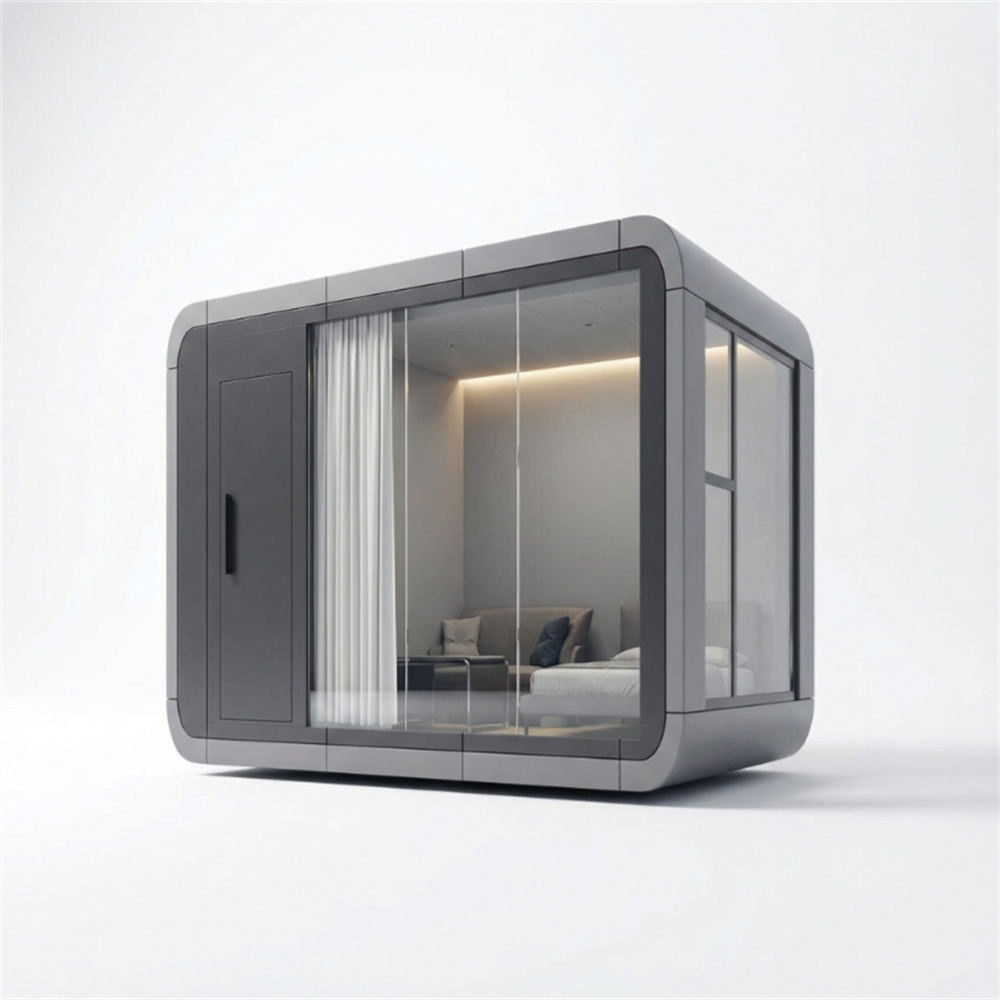
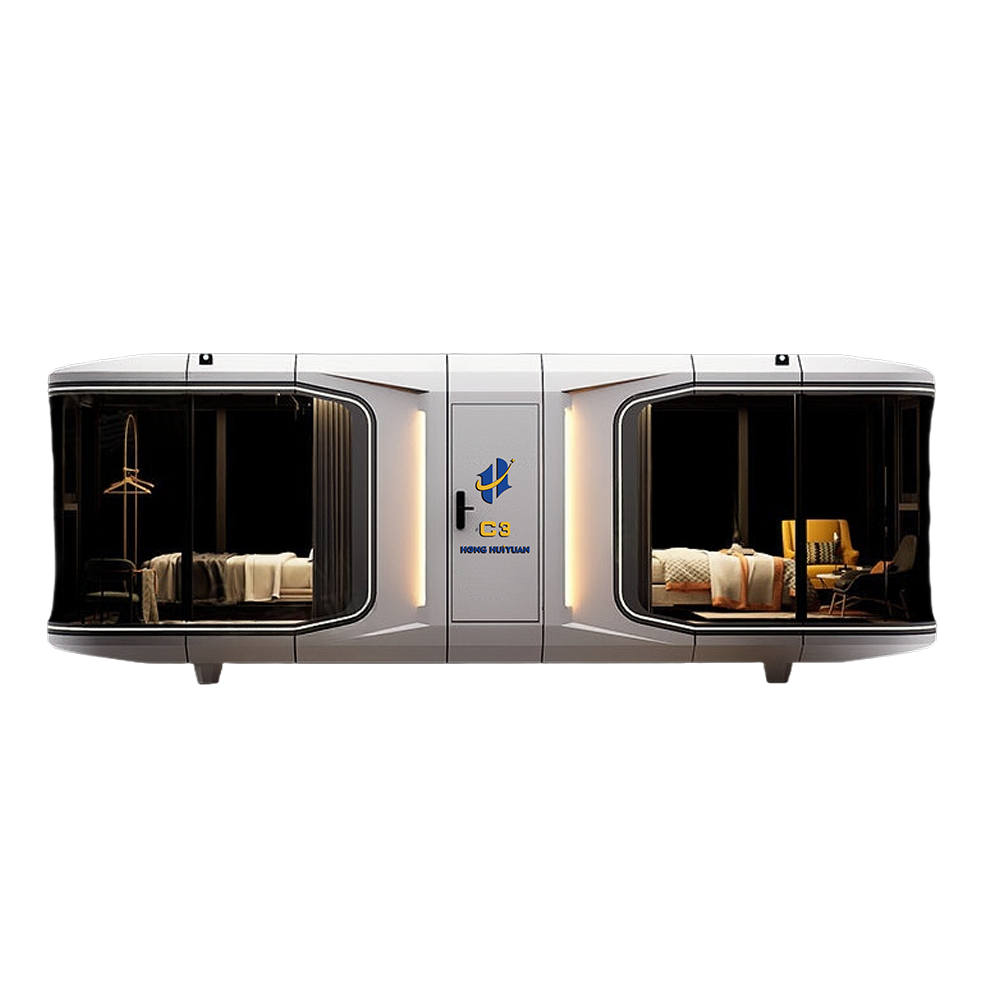
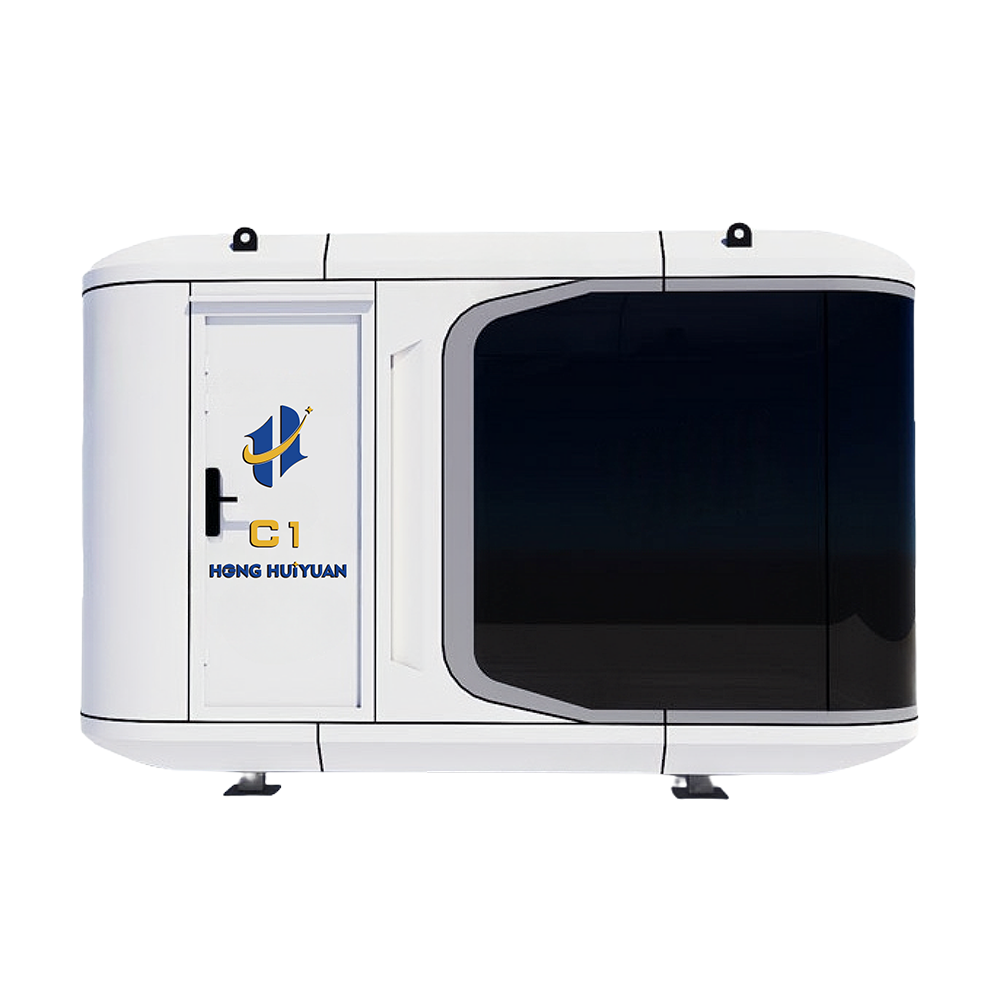 Smart Living Pods with Advanced Insulated GlazingThis supplier offers modular capsule homes featuring double-layer tempered hollow units. The glazing specifications indicate overall build quality, making these pods a strong choice for buyers prioritizing thermal performance and durability.View Product →
Heat travels through a window in three ways: conduction through the glass and frame, convection inside the cavity, and radiation between the two glass surfaces. A single pane of clear glass performs poorly on all three counts. A double-layer tempered hollow unit solves the first two mechanically and the third with a Low-E coating.
The sealed air gap is the key mechanical improvement. Air is a poor conductor, so a 12 mm cavity blocks a large share of conductive heat flow. Many premium capsules fill the cavity with argon gas, which has lower thermal conductivity than air and improves the U-value by another 10 to 15 percent.
The Low-E coating handles radiation. In winter, it reflects long-wave infrared from the warm indoor surface back into the room. In summer, it reflects solar radiation before it enters the interior, lowering air-conditioning load. A typical 6+12A+6 Low-E unit reaches about 1.1 to 1.6 W/m²K, compared with about 5.8 W/m²K for single clear glass and 2.7 to 2.8 W/m²K for an uncoated double unit.
Condensation is often the first sign of thermal weakness. On a cold morning, single glass fogs up and drips; a well-sealed Low-E unit keeps the inner surface temperature close to room temperature, so condensation rarely forms.
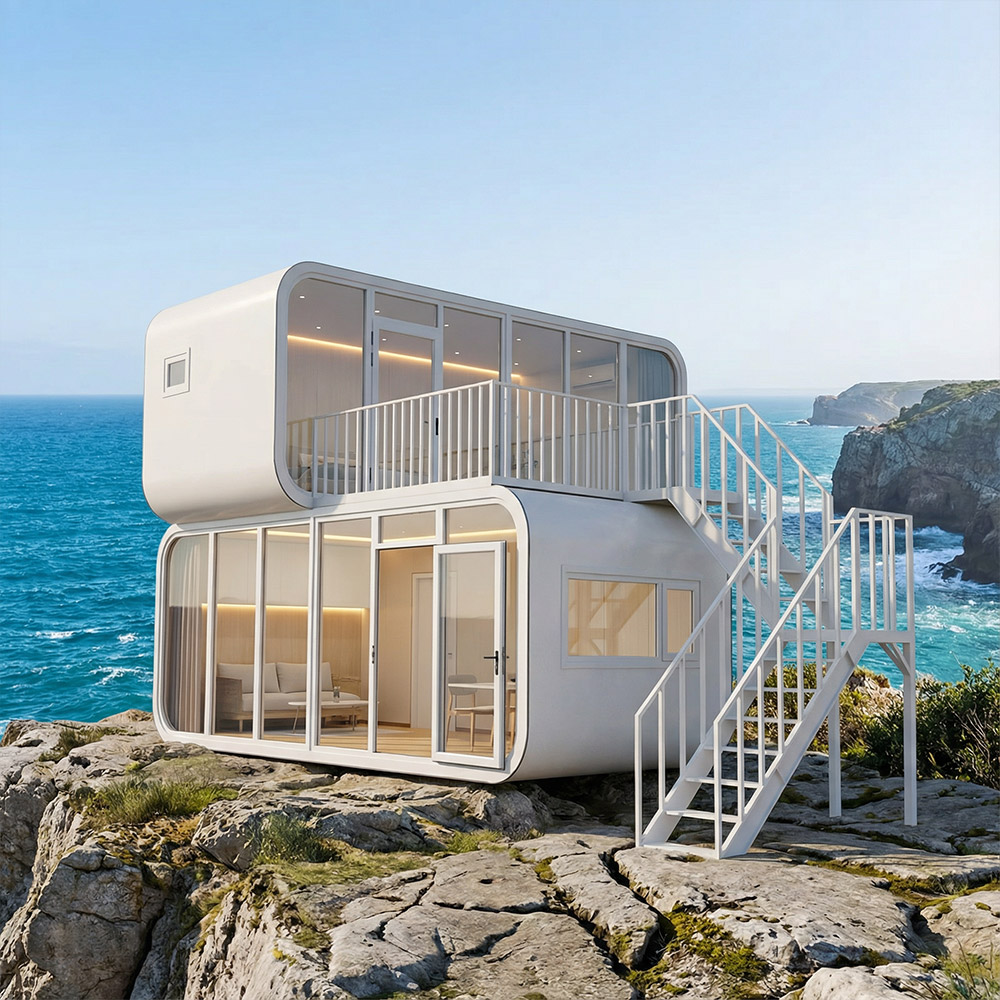
For panoramic capsule models with unusually large window walls, this performance is the difference between a comfortable retreat and an energy-hungry greenhouse. The S32 Panoramic Modular Capsule Home uses generous glazing to create open views, and its liveability depends directly on the insulated glass package behind those views.
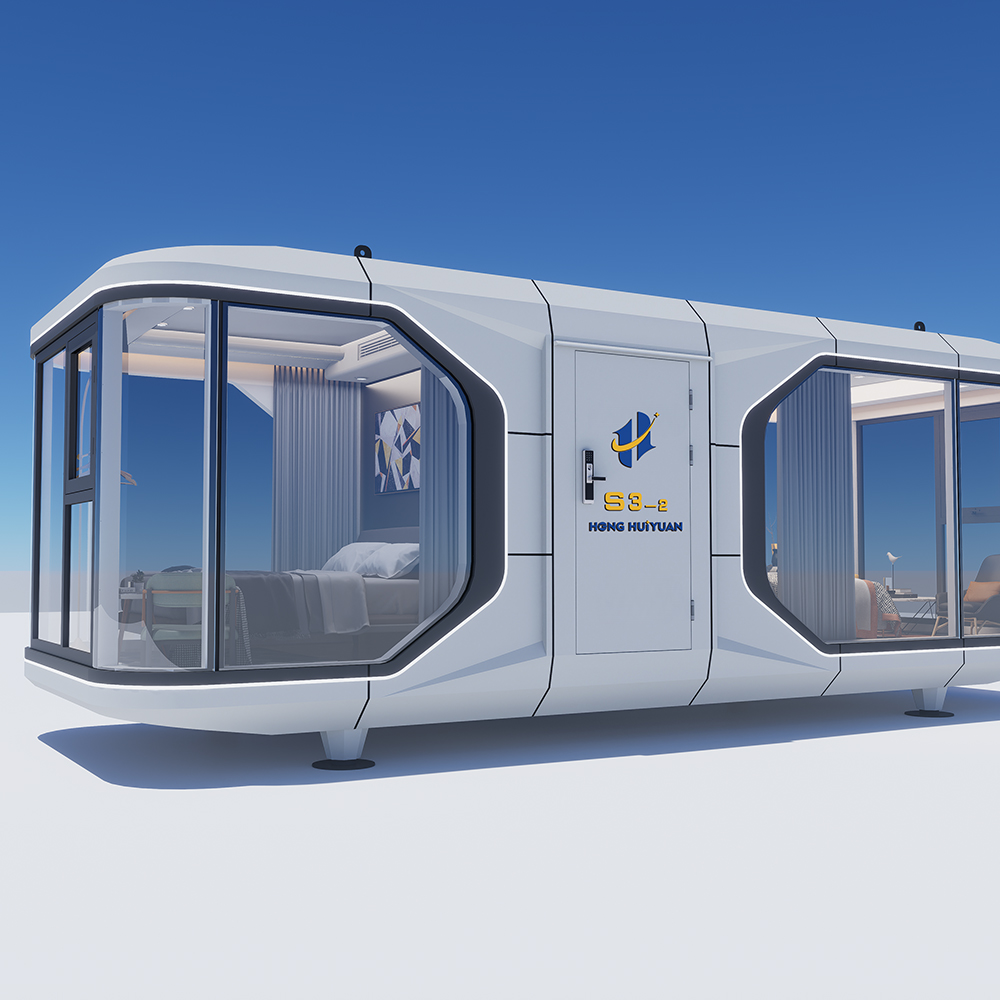 S3-2 Panoramic Modular Capsule Home with 270-Degree ViewsThe Star Residence S3-2 combines a sturdy steel-aluminum shell with 270-degree floor-to-ceiling windows and intelligent controls. Its large glazing demands high-performance insulated glass, ensuring comfort and energy efficiency in open, sun-exposed sites.View Product →
Ultraviolet radiation is divided into UV-A and UV-B. UV-B causes sunburn, while UV-A penetrates deeper into the skin and accelerates aging. Both also attack interior materials: furniture, flooring, and decorative finishes fade, yellow, and become brittle after months of direct sunlight.
Standard tempered glass already blocks most UV-B, which has very short wavelengths. The bigger challenge is UV-A, which passes through ordinary glass more easily. A double-layer tempered hollow unit with a Low-E coating significantly reduces UV-A transmission because the metal-oxide layer reflects a large share of the solar spectrum, not only the infrared portion.
Good UV shielding does not mean making the capsule dark. High-quality Low-E coatings are engineered to block UV and infrared while keeping visible light transmission comfortably high, usually above 70 percent. Occupants still enjoy bright, natural interiors while their skin and belongings are protected during long stays.
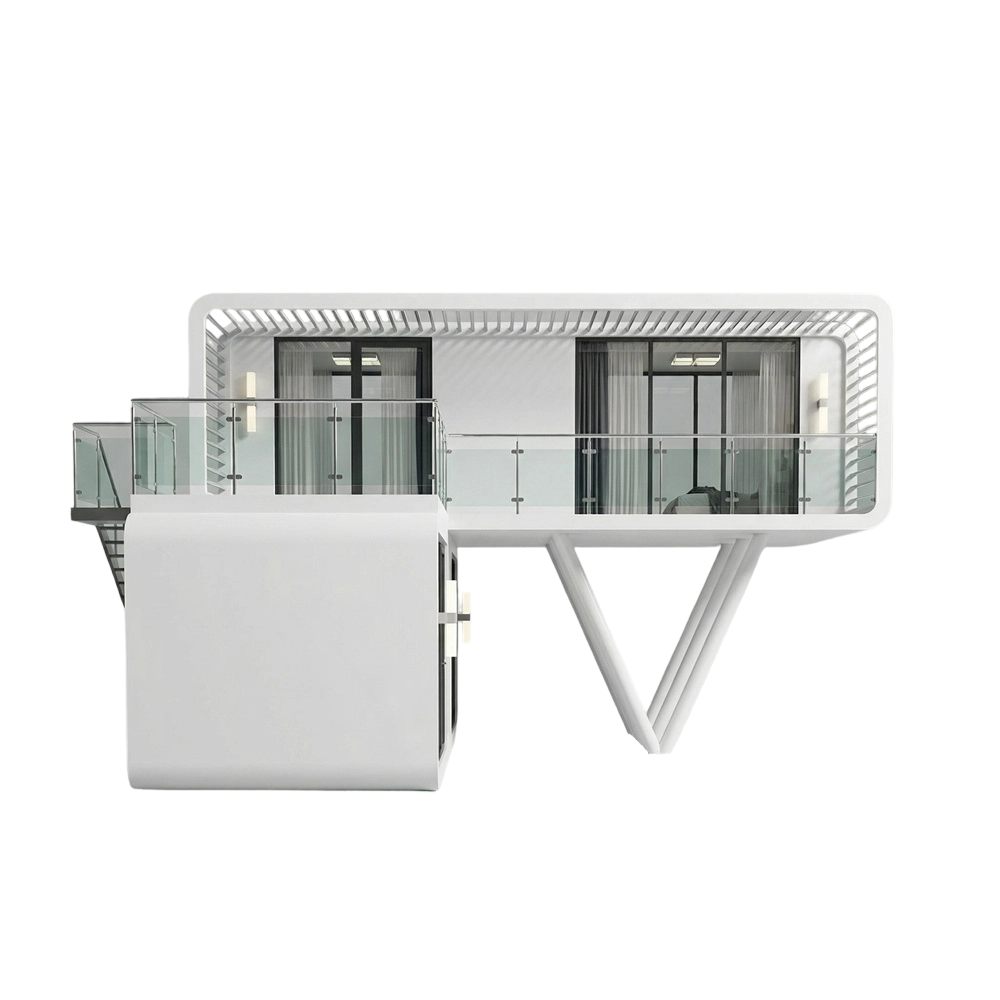
Sun exposure varies by site. A capsule on a snowfield, a coastal cliff, and a desert all face different UV loads. Outdoor-oriented models such as the Eco-friendly Waterproof V-Type Capsule Camping Cabin are built for continuous exposure to open sky, so the optical performance of their glazing deserves extra attention during specification.
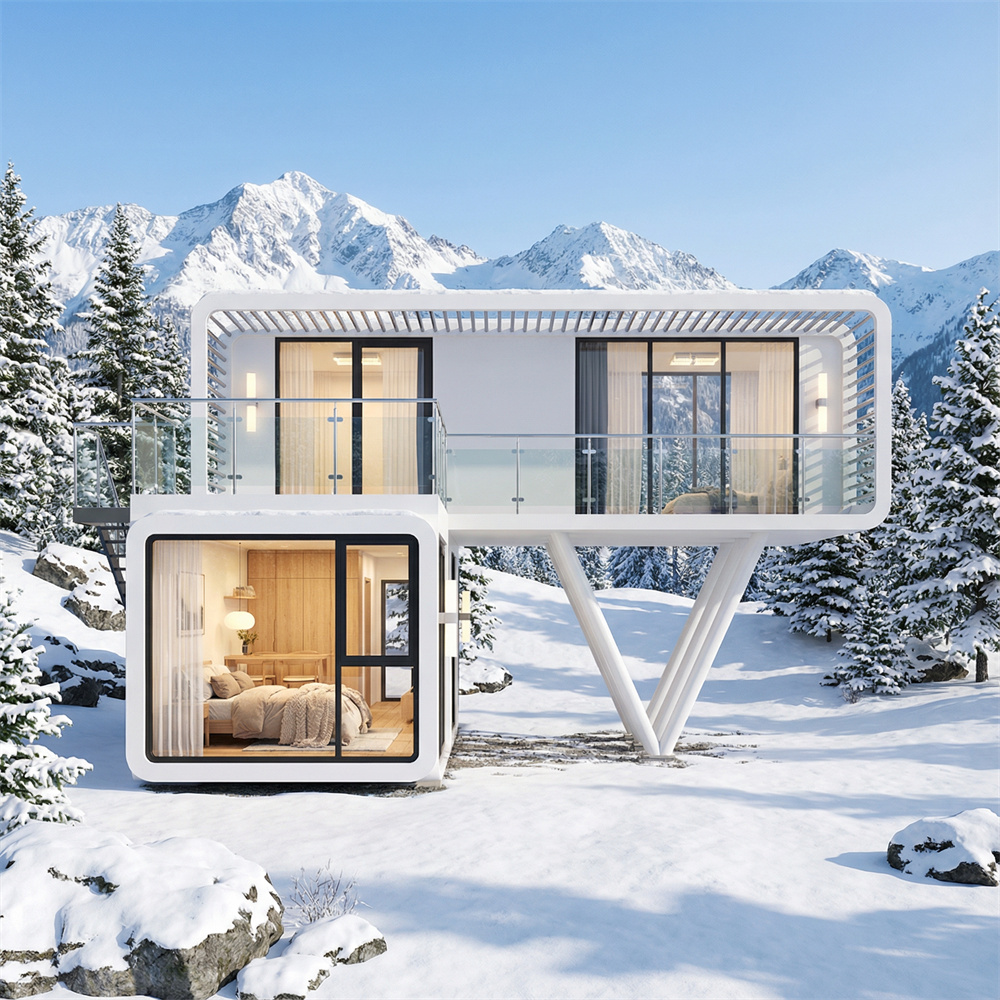 Eco-Friendly Waterproof V-Type Space Capsule Camping CabinThis V-shaped camping cabin offers panoramic windows, eco-friendly waterproof materials, and easy assembly. Designed for continuous outdoor exposure, its glazing performance is crucial for UV protection and comfort in various natural environments.View Product →
The table below summarizes how double-layer tempered hollow glass measures up against single clear glass and the same unit with a Low-E coating. Figures are typical engineering values, not measurements of any single production batch.
| Performance Indicator | Single Clear Glass | Double Tempered Hollow | Double Tempered Hollow + Low-E |
|---|---|---|---|
| Impact strength | Low | 4 to 5 times higher | 4 to 5 times higher |
| Breakage pattern | Sharp shards | Small blunt granules | Small blunt granules |
| Typical U-value (W/m²K) | about 5.8 | 2.7 to 2.8 | 1.1 to 1.6 |
| UV transmission | High | Moderate | Low |
| Solar heat control | None | Moderate | Good |
Two patterns stand out. First, tempering changes breakage behavior while keeping the same optical properties. Second, the Low-E coating is what pushes the unit from merely insulating into energy-efficient. If a quotation lists only double-layer tempered hollow glass without mentioning Low-E, the thermal performance will be noticeably weaker.
Not all double-layer glass is made to the same standard. Three units can share the same 6+12A+6 label and perform very differently in practice. Use these checks when comparing suppliers.
Ask for the full glazing specification in writing: pane thickness, cavity width, gas fill, and whether a Low-E coating is included. A vague insulated glass description is a red flag; a precise 6+12A+6 Low-E, argon, warm-edge spacer statement is the baseline you want.
The seal system is the most failure-prone part of an IGU. Look for a continuous spacer with desiccant, a primary seal at the glass surface, and a structural secondary seal. Poorly sealed units develop internal fog or condensation inside the cavity within a few years and must be replaced.
Tempered glass normally carries a permanent corner marking that identifies the tempering standard and the factory. Ask for a copy of the safety glass certificate or test report. If a supplier cannot show evidence of tempering, the tempered claim is unverified.
Cold climates benefit most from a Low-E coating that maximizes winter heat retention. Hot sunny climates benefit from a coating with a low solar heat gain coefficient that rejects solar heat. One coating cannot be optimal for both extremes, so discuss the project site with the manufacturer.
Because glazing interacts with frame design, orientation, insulation, and HVAC, the most reliable path is to compare complete capsule house models rather than isolated glass samples — browse the available modular capsule house models and request a specification sheet for each shortlisted unit.
It describes the IGU construction: two 6 mm glass panes, a 12 mm air gap, and a second 6 mm pane. The letter A stands for air, indicating a dry-air-filled cavity, while argon-filled units may be marked with Ar instead.
In practice, yes. Tempering provides the basic safety property of granulated breakage, and the double-layer construction adds redundancy: if the exterior pane is cracked, the interior pane still separates occupants from the outside until the unit can be replaced. The complete framed system is also more rigid.
Not necessarily. Low-E is engineered to reflect infrared and UV while transmitting visible light. High-performance coatings typically maintain visible light transmission above 70 percent, so the interior stays bright while solar heat gain and UV transmission are reduced.
Most capsule manufacturers, including Zhejiang Honghuiyuan, support custom design. Curved panoramic capsules, larger openings, and climate-specific coating selections are common requests. The glazing specification should be written into the project contract so the delivered unit matches the agreed construction.
Double-layer tempered hollow glass is not a marketing phrase — it is a measurable combination of safety, thermal, and optical properties. Specified correctly, it turns a large window wall into the strongest and most comfortable part of a space capsule; specified carelessly, it becomes the weakest link in the whole envelope.
For project owners and procurement teams, the takeaway is simple: put the full glazing specification on the table, verify the construction and certificates, and choose the coating according to local climate. A capsule house with honest 6+12A+6 Low-E glass will stay safer, quieter, and more comfortable for years. That is the value hiding inside two thin panes of tempered glass and twelve millimeters of air.

 Contact Us
+86-137 5820 5685
+86-571 8550 0659
 Send An E-mail
Building 4, No. 2, Shuyun Road, Yuhang District, Hangzhou City, Zhejiang Province, China
 Mobile
LLC "Laser Components and Systems" (ООО «Лазерные компоненты и системы»)
Authorized Territory: the entire territory of the Russian Federation and the Republic of Belarus
Tel: +7 (911) 110-01-02
Email: [email protected]

 English
 Español
 عربى